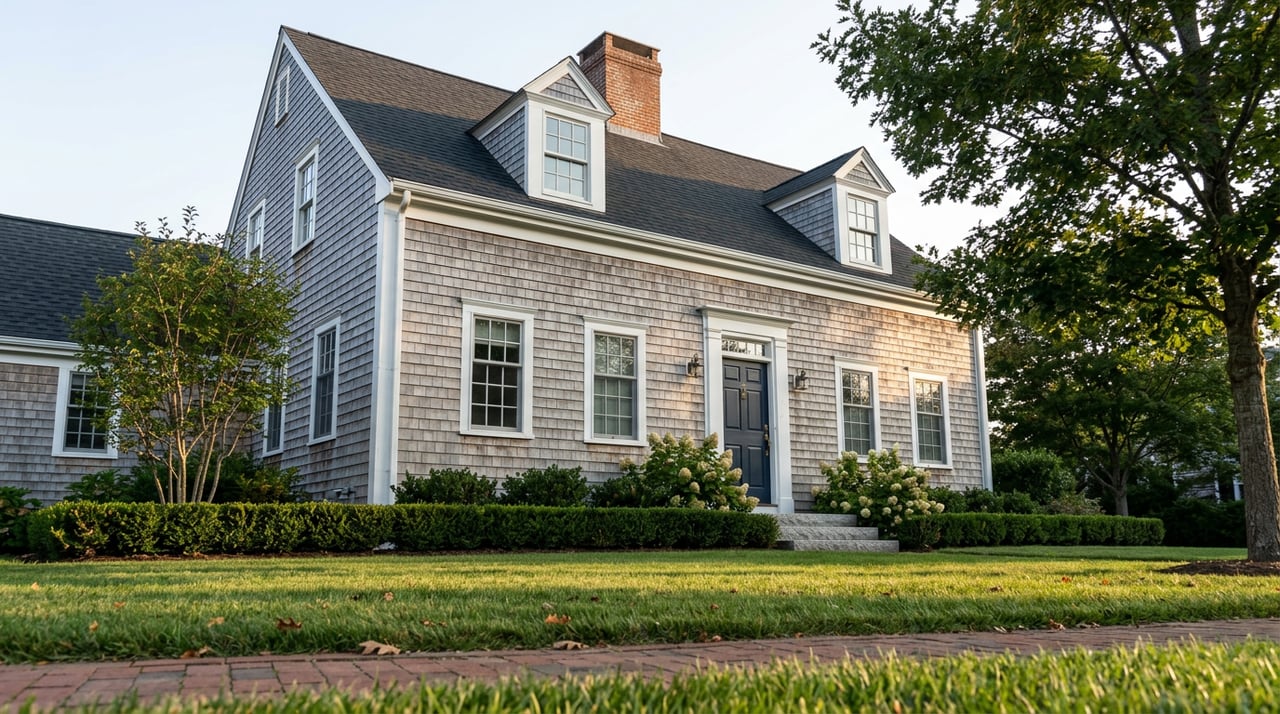
A homeowner on a side street off Main Street replaced their siding, added a taller board-and-batten section on the rear elevation, and installed new trim around the door. The work looked good. It also happened without a permit, and without the Certificate of Appropriateness that East Greenwich's Historic District Commission requires before that kind of exterior change can begin. Staff didn't find out until the project was already finished. The house, a circa-1828 Federal design with later Second Empire alterations, went back before the commission in November 2025 so the finished work could be measured against the standards it should have cleared months earlier.
That sequence, work first, approval after, is the exact problem that catches sellers off guard in East Greenwich's historic districts. Most guides to buying or selling here treat the historic designation like a plaque on the mantel: charming, a little restrictive, worth mentioning once. What actually determines how smoothly your sale goes is whether the paperwork behind any exterior work matches what's on the ground. A tasteful, historically appropriate renovation with no certificate on file is a bigger liability at the closing table than a house nobody has touched in twenty years.
The Two Questions On The Disclosure Form
Rhode Island's Real Estate Sales Disclosure Form asks two separate questions that, in a historic district, are really one question wearing two hats. The first: is this property located in a historic district? The second, several lines down: have building permits been obtained for all required construction or renovation while you owned the property, and if so, has final approval been obtained?
| Disclosure question | What it triggers in a historic district |
|---|---|
| Is the property in a historic district? | State law requires the seller to notify the buyer that the property "may be subject to construction, expansion, or renovation limitations," per Rhode Island General Law 5-20.8-2 |
| Were all permits obtained and finaled? | In East Greenwich, any exterior building permit for a historic-district property depends on a Certificate of Appropriateness having been issued first |
Answer yes to the first question and no to the second, and a buyer's attorney has grounds to ask exactly what work was done, when, and whether the town ever signed off. That's not a hypothetical. It's the situation the Federal-style home on that side street was in before its case reached the commission.
What Counts As Exterior Here
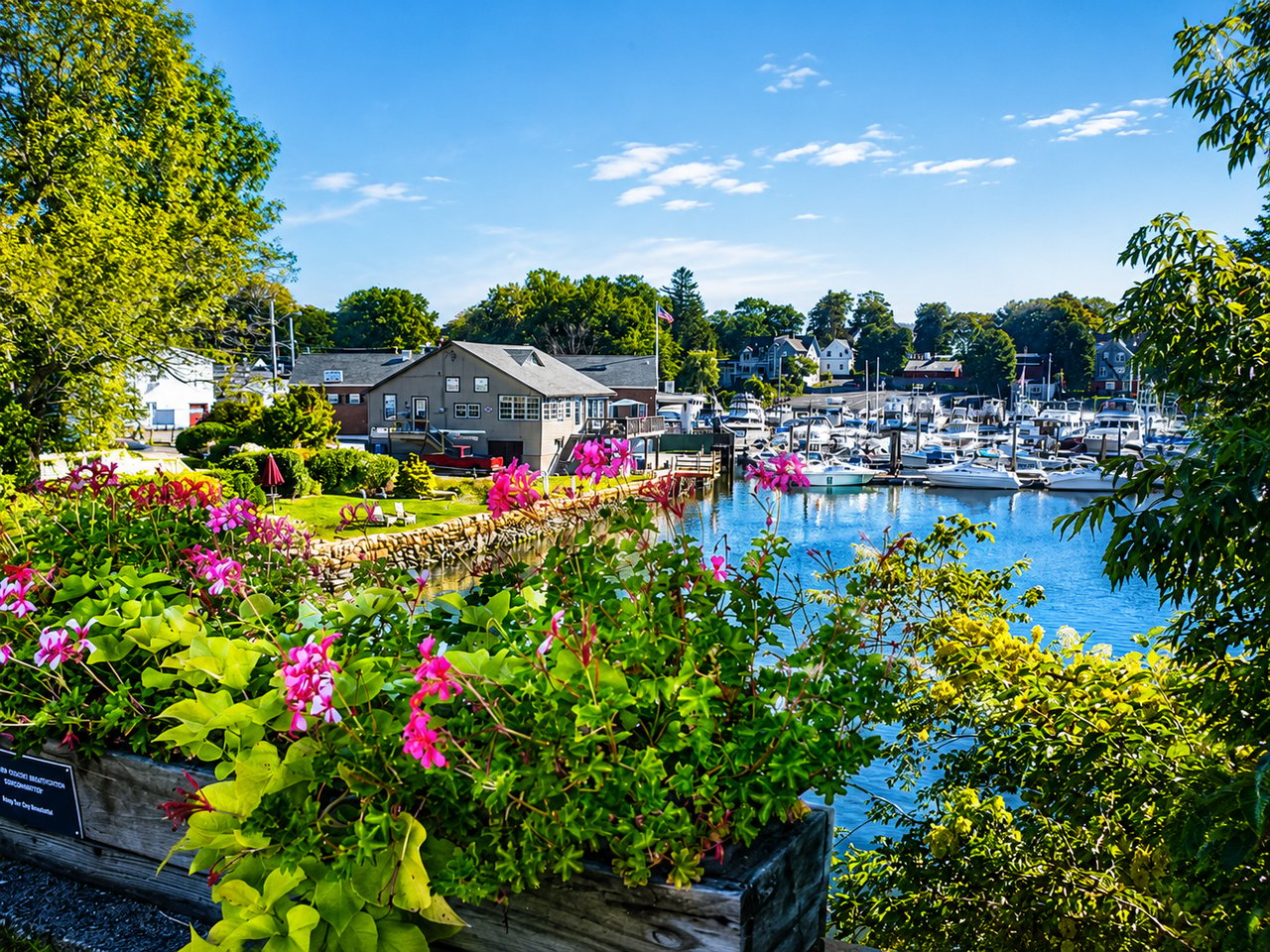
East Greenwich currently maintains historic district review over two distinct areas, the downtown Main Street district and the Hill and Harbor district, plus a handful of outlying properties the town has designated individually. Inside those boundaries, virtually anything visible from a public way needs a Certificate of Appropriateness before a building permit can be issued. That list is longer than most homeowners assume:
- Window and door replacement
- Additions, dormers, and porches
- Roofing and siding material changes
- Paint color changes on some structures
- Fences, gates, and outbuildings
- Solar panel installations
- Demolition, partial or complete
A Greek Revival home on Liberty Street went through this exact path in 2024. The owners applied to replace windows, the commission reviewed the request against its standards for maintaining original materials, and the application cleared as a final approval. That's the process working the way it's supposed to: application first, work second.
The Fast Lane And The Slow Lane
Not every project needs a full hearing. East Greenwich's ordinance carves out a staff-review track for smaller categories of work, things like dumpster enclosures, certain fence styles, and solar installations that won't be visible from any public way. A minor solar system, defined under a 2017 ordinance later amended in 2023, can get an administrative sign-off from town staff rather than waiting for the commission's monthly meeting, but only if the panels stay off the street-facing roofline and out of the downtown district's ground-mounted prohibition. Everything else, additions, new construction, anything visible and non-routine, goes to a full hearing where the commission votes.
That distinction matters for a seller's timeline. If you're touching up a historic property before listing, knowing which track your project falls into is the difference between a two-day turnaround for a stamped certificate and a wait for the next monthly meeting, plus however many meetings it takes if the commission asks for revised plans.
When The Work Outpaces The Paper
The commission's own history shows what happens when owners skip the sequence or push back on its standards. In January 2022, an applicant proposing a rear porch and shed dormer addition told the board he intended to use Hardie composite siding. The commission was specific that it would not approve a composite material on that project and found wood cedar siding appropriate instead. The applicant adjusted the plan.
The 2025 case didn't have that back-and-forth, because the work was already done. The staff report noted plainly that the changes differed from what had been conceptually approved, and that no permits had been pulled at all. Resolving that after the fact means the seller of that property will eventually need to explain, on the disclosure form, exactly what happened and when it was corrected. Buyers and their lenders read that box carefully in a historic district, because it's the one place on the form where an unresolved answer can stall a closing while the town sorts out compliance.
The Credit Most Listings Don't Mention
Here's the part that flips this from a liability into leverage. Rhode Island's Historic Preservation Tax Credit covers 20 to 25 percent of qualified rehabilitation expenditures on certified historic structures, and East Greenwich also runs its own local historic tax credit program that homeowners can apply for directly through the Historic District Commission. In April 2026, the commission approved two of these local credit applications in the same meeting, one for a property on King Street and another for a property on Cedar Avenue. Both went through the process in the order it's designed to run: application, review, approval, credit.
That's the version of historic-district ownership worth marketing to a buyer. A seller who can show a completed Certificate of Appropriateness file alongside a documented tax credit isn't just disclosing compliance, they're handing the next owner a paper trail that proves the work was done right and partially subsidized. It's a stronger listing story than "historic charm" on its own, and it only works if the paperwork exists.
Timing A Fall Listing Around This
East Greenwich's median owner-occupied home value was estimated at $671,700 as of the town's 2024 data, and the historic core along Main Street and through Hill and Harbor tends to sit at or above that figure. Those are exactly the homes most likely to fall inside the review boundary, which means the sellers with the most value at stake are also the ones most exposed to this specific friction.
If you're planning to list a historic-district property this fall, the practical move is to pull your file before you touch anything. Check with the town's Planning Department for the permit and Certificate of Appropriateness history on record. If there's a gap between work that was done and paperwork that was filed, closing it before the home goes live saves you from having to explain it mid-transaction. The commission meets monthly, generally issuing stamped certificates within two days of a hearing, so a straightforward application can move faster than most sellers expect. It's the unpermitted work that turns a two-day turnaround into an open question at closing.
Frequently Asked Questions
Does every home in East Greenwich fall under historic district review? No. Review applies specifically to properties within the downtown Main Street historic district, the Hill and Harbor historic district, and individually designated outlying properties. A property outside those boundaries isn't subject to Certificate of Appropriateness review even if it's an older home.
Can I do interior renovations without commission approval? Interior work generally falls outside HDC review, which focuses on exterior changes visible from a public way. Confirm specifics with the Planning Department before assuming any project is exempt.
What happens if past owners did unpermitted exterior work? The property still needs to be disclosed accurately on the Rhode Island Sales Disclosure Form, and the current owner may need to bring the work into compliance with the commission before or during a sale, regardless of who performed the original work.
If you're weighing a sale in East Greenwich's historic core and want a clear read on what your specific property's paper trail looks like before you list, the Steven Miller Group can walk through it with you and help you decide what's worth resolving now versus what can wait. Request Your Home Value to start that conversation.